


INTERVIEW
Tariffs, parallel deals and market challenges: how a complex sale process succeeded through trust and transparency
July 2026 – In May 2025, Bolster Investment Partners acquired a majority stake in Eternal Sun, a global leader in advanced solar panel testing equipment, from ABN AMRO Sustainable Impact Fund and Vermec. This transaction went on to win Best Small Cap Deal at the annual M&A Awards last December.
It also happened in parallel with the acquisition of Germany-based Wavelabs, a producer of cutting-edge simulators for solar cell measurement, by Bolster and Eternal Sun to create an unmatched product portfolio covering the full spectrum of solar testing technology. This deal was completed just a few weeks after the first transaction.
Oaklins Netherlands acted as exclusive sell-side advisor to the shareholders of Eternal Sun, bringing its extensive expertise in energy transition to the table.
A year after the successful closing of this complex process, we caught up with Erik Bentschap Knook, co-owner and CCO of Eternal Sun, Mark van Rijn, co-founder and managing partner at Bolster, and Tom Snijckers, partner at Oaklins Netherlands and expert in energy transition, to get insights into these deals and the progress that’s been made since.
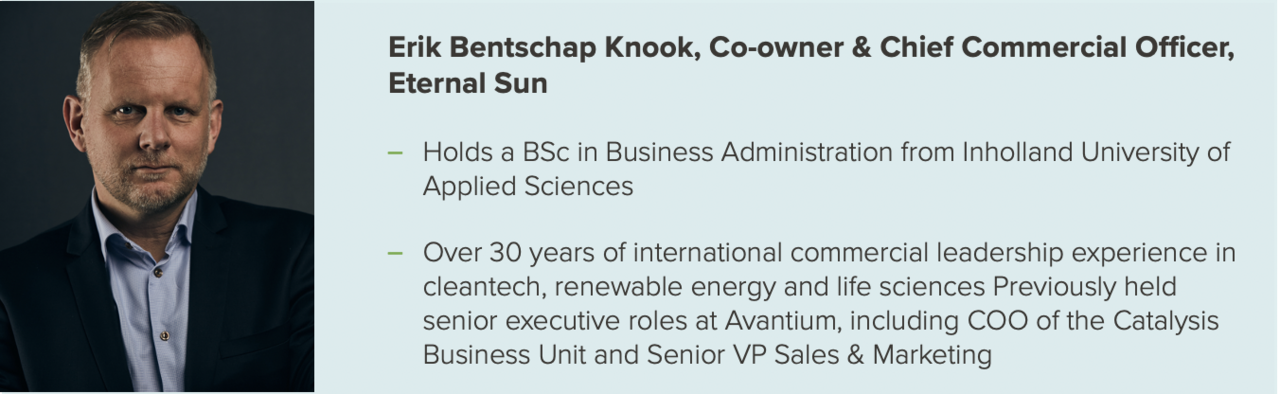
Can you tell us about your background and how you got started in the energy industry?
I studied business administration, and have always been in commercial lead and management positions in very high-tech companies with a lot of engineers, which need to bridge the gap between tech capabilities and customer needs — that’s where I get my energy. I worked in the medical, pharmaceutical, chemical and traditional energy — oil and gas — industries before moving to solar. This was my first real step into renewables, and I’d wanted to move in that direction. I’m now a passionate believer in solar.
We’re seeing more and more big companies investing in solar manufacturing to make sure they have access to the amounts of electricity they need. They build their own solar cells and solar modules, they deploy solar parks — they’re not selling the energy, they’re using it for their own organizations.
The massive worldwide increase in demand for electricity and electrification requires a significant part to be delivered with solar energy. It will play an important role, not least because of its price setting — solar’s costs have declined substantially, making it very competitive all around the world.ERIK BENTSCHAP KNOOK, CO-OWNER AND CCO OF ETERNAL SUN
What were the circumstances that led to the transaction between Eternal Sun and Bolster in May 2025?
Vermec and ABN AMRO Sustainable Impact Fund, who invested in the start- and scale-up phases of Eternal Sun, respectively, grew the company to the mid-size market segment. We wanted to look much more actively towards M&A for a buy-and-build strategy, and this next phase needed a new investor. In early 2024, we agreed at a shareholder meeting to start a search for the right partner to help us scale the company. We needed expertise to build up our solar simulator business and support us in achieving growth, rather than an investor looking for a quick return. The chairman of the board contacted a few potential advisors to support us, and we selected Oaklins by the end of Q1 that year.
Can you walk us through the process of negotiating the sale with Bolster?
At the start of the process, we deliberately kept a broad perspective on the most logical partner universe. Given Eternal Sun’s highly specialized technology and international customer base, we expected strong interest from strategic parties, particularly in markets such as the USA and Germany where solar manufacturing and testing are highly relevant. That was also one of the reasons why Oaklins’ international reach and sector network were important to us.
As the process developed, however, it became clear that the best partner was not necessarily the most obvious strategic buyer, but the party that best understood the company’s long-term potential, the specific dynamics of the solar testing market and the importance of supporting a buy-and-build strategy. Bolster stood out in that respect. They were entrepreneurial, pragmatic and willing to look through short-term market volatility, while also bringing the financial strength and strategic support needed for the next phase.
In Q2 2024, we started preparing the documentation and after the summer we held more than 20 management meetings with interested companies and investors over eight weeks. We quickly narrowed the field down to a smaller group of serious contenders, and ultimately to two preferred parties. Over time, it became clear that Bolster was the right long-term partner for Eternal Sun.
We were negotiating with Bolster while also teaming up with them to investigate Wavelabs as a potential acquisition target and travelling together to the company’s HQ in Leipzig, Germany. But it didn’t feel awkward, and I think that’s an important point. There was a lot of trust already.
Were there any notable challenges or obstacles you faced during the sale process?
We faced a geopolitical hitch. An important part of our business is in the USA, and on 2 April, the very day a renowned Dutch bank was set to definitively approve the financing for the acquisition, US President Trump unexpectedly announced far-reaching import tariffs of 125% on Chinese goods and 20% on European products.
The bank immediately withdrew the pledged financing, threatening to derail the deal. This is where the triangle of Bolster, Oaklins, and the sellers and management on our side quickly came up with an integrated solution that worked for all the parties.
A few weeks after we signed the deal, the Dutch bank came back and said they still wanted to work with us, so within months, we converted the vendor loan, which was part of the integrated solution, back to a bank loan.
Eternal Sun had some specific objectives from this sale, including accelerated international expansion, supporting a buy-and-build strategy, further professionalization of the organization and strengthening Eternal Sun’s leadership position in solar testing and metrology. One year after closing the deal, how are these objectives progressing?
In terms of international expansion, the market is picking up and I think the investment with Wavelabs was a very smart choice because we can now sell largely to the same customers. Wavelabs hadn’t previously found success in the USA but now we can offer their products through the strong sales network we have there. We’ve also gained much more access to companies in Germany thanks to them, and in India, we can sell technology from Wavelabs and really benefit from the market conditions there.
This year we are already substantially exceeding the investment memorandum for 2027, which is in part due to the acquisition of Wavelabs. We bought the company for a reasonable price, and it’s adding a lot of revenue and EBITDA.
We’re actively talking to potential partners regarding our buy-and-build strategy. Mark and his team are supporting us in terms of professionalization, and the selection of the new CEO was partly based on capabilities in that area — he’s taking on the professionalization projects that we can’t. Mark has played an important role in the multiple C-level hires we’ve made, making it clear that we needed to reduce our exposure to one individual.
What are your objectives for Wavelabs in the future?
Firstly, make the most of the market opportunities it offers. It should also start looking at what the next big product in solar cell testing could be in four or five years’ time.
What trends do you think will be significant in the energy industry going forward?
The demand for solar is sky rocketing. However, it’s not a given that in a growing market, everyone will benefit. You have to fight hard to make sure that competitors aren’t taking your piece of the pie. But with solar ramping up quickly to address the increasing electricity need, I’m enthusiastic!
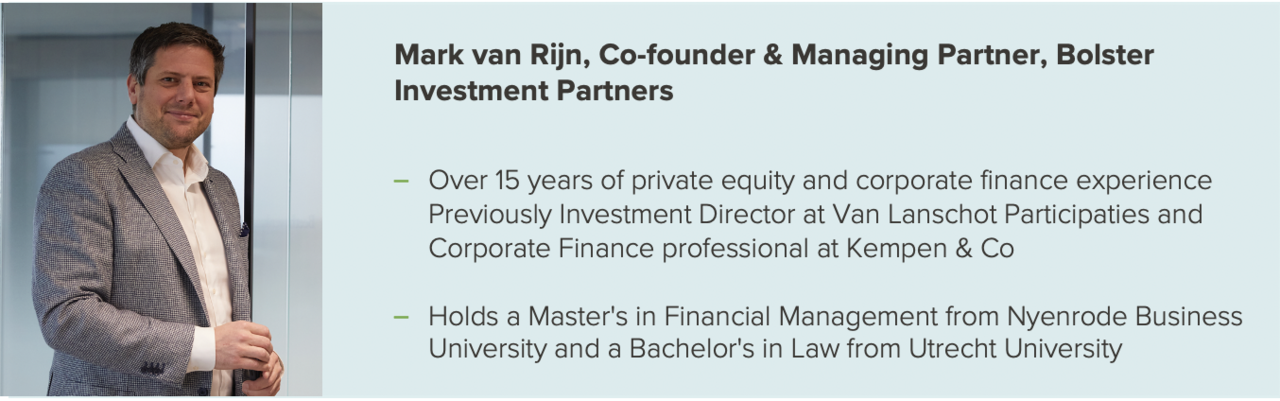
Can you tell us about your background and how you got started in the investment industry?
We had a family business, which was important for my development, and after I finished university, I started my career in corporate finance. I worked on different M&A transactions in several sectors, mainly focused on Western Europe. In 2009, I started within the investment side of Van Lanschot Participaties, a subsidiary of Dutch bank Van Lanschot Bankiers NV. Eventually we carved out our business in 2017, away from the bank, and became Bolster.
What growth goals does Bolster have when seeking an acquisition target?
It depends on many things — the sector and the type of company, for example. In general terms, we look for yearly growth of 5–10%. We invest in sustainable, growing businesses, although growing very fast has its own risks and we’re not a big risk-taker.
Can you walk us through the process of finding suitable targets?
A big part of our deal flow generation is talking to all kinds of advisors, such as corporate finance advisors like Oaklins, family business advisors and accountants. Along with that, we do a lot of our own research and approach companies directly. About 50% of our deals comes from our research, and often we’re in contact with those companies for several years.
Were there any particular challenges or obstacles during this acquisition process?
It was quite challenging, although we did win the M&A Award for best deal in this sector, so the effort was recognized by third parties!
It was a complex situation with President Trump’s tariffs, some hesitation regarding solar energy both in the Netherlands and abroad, and a parallel acquisition. But Eternal Sun was a case where each time we turned the page, the story was even better than we expected. Usually, companies are presented one way and when you turn the page, the reality is less positive. This time, it was the opposite and that gave us a lot of confidence. There are very good people at the company, especially considering its size — we were very impressed by the leadership team.
Another unique aspect was Wavelabs. Eternal Sun really wanted to buy the company to turn it around, but they were in a takeover situation themselves. So there were parallel transactions and it was very complex. Closing was only possible because there was a lot of confidence from the sellers, from their advisors, from the management and from our side that we were all playing it fair. Without that trust, it would never have worked.
It’s still early days but the cooperation with Eternal Sun is fantastic — open, transparent — so we can deliver our value to the company while getting the information we need from them. We’re very happy with how things are evolving.MARK VAN RIJN, CO-FOUNDER AND MANAGIING PARTNER AT BOLSTER
Looking back over the last year, how would you describe your partnership with Eternal Sun?
Are there any lessons learned or unexpected events you’d like to mention? The sentiment about turning the page and it’s better than you thought — that keeps going every month! We’ve strengthened the C-level a lot, first with the new CEO, who is doing very well, and also a new COO and CFO, all to shore up the business.
What are your objectives with Eternal Sun for the coming months?
Predominantly managing the growth we have. It’s growing very fast, which is wonderful. Erik and his team are closing the biggest deals ever — we’re entering new markets, new clients, new geographies. The biggest challenge is how can we produce, engineer and develop. How can we maintain the high standards we have while still accepting all the deals we can do?
Going forward, how do you see Bolster’s acquisition strategy evolving?
We will continue what we’re doing. We’re sector agnostic, we look at B2B, preferably production companies with a very high tech component and international presence, and most of the time our companies are global market leaders in their respective niches. We aren’t going to help businesses like Eternal Sun develop a new machine — we’re interested in that aspect but it’s not where our knowledge lies. It’s the other elements that have to be in place to grow and develop the business, that’s where we come in — buy and build, writing a strategy, using the balance sheet in the right way, HR, structuring the organization and addressing growth factors.
We like investing in companies such as Eternal Sun where the family or founder are still in place and we can grow the business together. It’s a lot about context and situation, and whether we resonate. In the case of Eternal Sun, we were very enthusiastic and I think we put our money where our mouth is. We took more risk than we usually do in these processes, by investing in gaining knowledge, but if you’re really convinced, you have to do what it takes to move forward.
Bolster’s investment portfolio is extremely varied, covering many sectors — is energy one you will continue to look at in the future?
What do you see as the key trends in this market? In general, we want to go into electrification in all kinds of industries and businesses. Infrastructure and supply are both missing, especially at local levels, leading to businesses that can’t operate or houses without electricity. A lot of the bigger companies now see not having to depend on other industries or geographies for energy as a crucial part of their strategy — having their own power supply can mean avoiding the risk of not being able to develop the business further or it being interrupted because of an energy shortage.
That is driving a lot of different energy initiatives and plans at strategic board level. Solar is important because in a lot of places of the world it’s the cheapest way of producing energy. Right now, because of the new technologies being developed, many places are thinking of starting their own supply chain so they won’t be dependent on China. That country produces around 80% of the world’s traditional solar panels, but this is going to shift to new technologies and it’s the moment to chip in if you want to be independent of China.
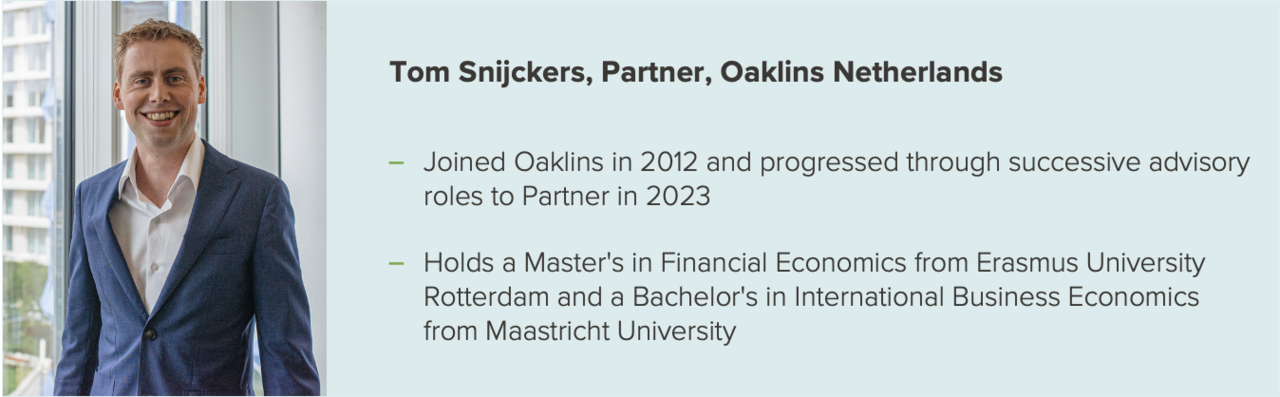
Can you describe the initial mandate from Eternal Sun and your approach to positioning the company for the sale process?
The Eternal Sun management team is ambitious and were looking for their next growth phase that required a fully aligned shareholder, which is why we started the process. That’s also how we positioned the company. What is positive about Eternal Sun is that they’re active in a very important niche market. They’re crucial not only for the price setting of solar panels but also to further develop solar panel technology, which is why they’re in research centers around the world. The technological process that we see in solar panels is driven by the fact that the Eternal Sun machines can measure very small percentages of increase, so developers can continue to find better compositions and layer combinations.
What ultimately made Bolster the best long-term partner for Eternal Sun?
We spoke to and dealt with many parties throughout the process. Solar’s long-term trend is to go up but in between, it’s facing a lot of ups and downs. Many partners that we spoke to only looked at the trend of the day. When President Trump was talking about Liberation Day, some parties decided to step back or preferred to sit it out. What we noticed about Bolster is they were very cool-headed. They saw what was happening but knew that a week later, the situation could be different. It showed how cooperation with them would play out in the coming years. Bolster is on this journey together with us.
You're active in many transactions in this space. How did that experience shape your strategy in this deal?
It was key when it came to positioning Eternal Sun. We knew that the solar market in the Netherlands was tricky. People would see that the company is based there and probably decide to sit this one out. So we had to position the deal as a global one.
In a complex sale process like this one, business owners need to keep their sights on the horizon. Many things happen and change constantly, but keep calm and carry on!TOM SNIJCKERS, PARTNER, OAKLINS NETHERLANDS
Are there any notable trends you’ve observed in the energy transition sector in your recent deal work?
Next to energy independence, energy prices are a very important component in production and service processes — to be able to compete on a global scale, or just to compete at all, energy prices matter. If your price is higher, then it’s much more difficult to compete with companies elsewhere around the world where it’s lower. That’s true for production companies, such as Tata Steel, but also for companies like ChatGPT or AI in general — energy is a significant part of their process, and the ability to generate it cheaply is of strategic importance.
What would you say are key success factors in closing deals in this field?
There are many keys, such as operating in a niche market and good cooperation between the parties, but if I had to choose one, it would be the management team. In this deal, they were so good at passionately presenting Eternal Sun and handling the growing business, as well as coping with the many meetings we had with interested parties. Few management teams could keep so many balls in the air and be this successful.
Talk to our industry specialist

Partner
View profile